
Castro Indicted? It's A Start
But there are better targets in Cuba... and we should demand them


So happy Memorial Day, all! And as we remember those who have served and sacrificed for this great nation, we hope you are also enjoying the freedom and prosperity that they ensured. So we hope you cracked a beer, lit the barbecue, hung with family and friends… they haven’t taken that away from us yet!
Meanwhile: to business. Because the Trump administration is clearly settling some old scores — scores that, in our estimation, are long overdue. Venezuela, Iran, and now… Cuba. Where’s all this heading? And are we targeting the right people?
Then Chris weighs in with why the New York Times should probably stick to what they know best (you know — socialist propaganda. It’s certainly not police work). And also why LAPD is stuck in a city that will just never back them.
Here we go.

Cuba: The Terrorist Old Age Home
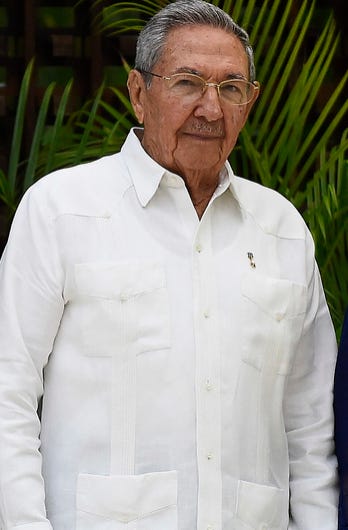
There are stories that announce themselves with a siren and stories that arrive with a shrug. The reported federal indictment of former Mexican dictator Raúl Castro feels like both.
The details are still developing, and the chronology raises eyebrows. John Ratcliffe reportedly just made a quiet visit to Havana, and not long afterward word surfaced that the United States had moved publicly against Castro. Whether those events are connected, and how, remains unclear. Intelligence channels rarely come with footnotes. Did the the current Cuban regime agree to give him up? What a shift that would be.
But if Washington is reopening old files with Havana, there are bigger issues sitting in plain sight.
For decades, Cuba has served as a retirement community for American fugitives, political extremists, and outright terrorists. While the diplomatic language shifts from administration to administration, the underlying reality has not: Havana has long provided sanctuary to serious criminals wanted in the United States.
If the conversation now includes extradition, the only names off the shelf should not be political figures, however symbolic. They should also include violent fugitives.
At or near the top of that list is Guillermo Morales.
Morales was linked to the Puerto Rican nationalist terror group FALN, whose bombing campaign stretched across the 1970s. Their most notorious attack came in 1975 at historic Fraunces Tavern in Lower Manhattan, a crime that shocked even New York and made the cover of every newspaper nationally (see below). The bombing killed four people and injured dozens more. Morales later escaped custody and ultimately ended up in Cuba, where he has lived openly for decades.

You do not have to agree on politics to agree that blowing up civilians in an historic restaurant and disappearing into state protection should not come with lifetime immunity.
Then there is Charles Lee Hill, accused of killing a police officer in New Mexico in 1971 before fleeing to Cuba. His case has lingered so long it risks being lost in the mists of time. I can guarantee you: New Mexico law enforcement has not forgotten

And then there is the one that got away.
Joanne Chesimard — convicted in the killing of a New Jersey State Trooper and long sheltered in Cuba — reportedly died there before ever facing return.
That is the problem with waiting.
If Washington is serious about accountability, then indictments should not become press releases and extradition should not become selective. Havana has been holding America’s overdue cases for a long time.
It’s time to ask for the whole file cabinet back. The United States has the leverage now; the Cuban nation barely exists as a functioning state.
Cuba, 90 miles off Florida, remains a stone in America’s shoe; as The Wall Street Journal just reported, Russia and China have recently actually recently increased their espionage activities against America based there. We’re not losing sight of that.
But enough’s enough. It’s time settle all Cuban business.
And while the U.S. attempts to deal with a hostile Cuban government, the Cuban people are begging us for help.
Time to help them — and us.
*****
Can We Launch This Guy Already??
I can’t remember anyone this hard to get rid of since Billy Martin (sorry — a dated baseball reference…).
So in a pretty shocking ruling, Obama-appointed federal District Court Judge Waverly Crenshaw threw out the case against Kilmar Abrego Garcia, the Salvadoran who entered America illegally and was subsequently charged with human trafficking. In essence, the judge decided that the trafficking case was “selective” and “tainted.”
Let’s go back to the beginning on Abrego. The guy is only still here because a U.S. immigration “judge” found that Abrego couldn’t be deported back to his home nation due to concerns that he would be targeted by the murderous Salvadoran gang, MS-13.
At least, that’s what Abrego told this “judge” (note that immigration judges aren’t judges in the true sense of the word; they reside under the executive branch, not the judiciary).
How could this U.S. immigration judge POSSIBLY know the conditions on the ground in El Salvador regarding Abrego’s situation, you ask? Short answer: he couldn’t. So he did what all these judges seem to do: they just throw the door open.
Subsequent investigation into Abrego Garcia revealed that he had gang tattoos for MS-13 himself (this is as per experts in the field, not the bogus media). He also appears to have associated with the gang, and yes, engaged in human trafficking, likely at the gang’s behest.

No matter. He became a hero to the left — a symbol of President Trump’s “overreach.”
That is the original sin of this farce. The idea that immigration “judges” residing in the United States can somehow parse the specifics of gang disputes in a foreign nation.
The Abrego case highlights one of the major flaws in our immigration system. THIS is the “reform” we need, not the “comprehensive immigration reform” the left constantly calls for, and which means, in essence, “amnesty.” Put simply: there is no way we can vet people like Abrego, or their asylum claims. As such, the default in such situations should not be, “welcome to America,” but rather, “prove it.”
Our wish: that Donald Trump hires not just more ICE agents, but far more genuine immigration judges. Ones with common sense, who can move the system along more rapidly so that we are not stuck with the care and feeding of gangbangers who become heroes to clueless lefties like Senator “Margaritaville” Chris Van Hollen.
But the continuing sin here is this Obama judge’s decision to throw the case out. Will this foolish decision stand? Our Legal Editor has his doubts… see below.
The Abrego Garcia Saga — NOW What?

An analysis of the District Court’s decision to dismiss the Abrego-Garcia prosecution last week requires a return to the first principles of our government: separation of powers.
From a basic constitutional standpoint, the Executive Branch prosecutes crimes. Not judges. Under our system, prosecutors get broad discretion to decide who gets charged, when charges are brought, and what charges fit the evidence.
But that executive power has a constitutional guardrail. The Executive may not use prosecution to punish a defendant for exercising a legal or constitutional right. That is the doctrine of “vindictive prosecution.”
The Supreme Court has been careful here. In United States v. Goodwin, the Court warned judges not to interfere too quickly in pretrial prosecutorial decisions. The Court recognized that evidence changes, investigations sharpen, witnesses emerge, and priorities change. For a multitude of reasons, a prosecutor may look more closely at already available facts and decide that a stronger charge is justified. The mere fact that a defendant exercised a right, or the passage of time, does not freeze a prosecution in place.
That is why this Tennessee ruling in the Abrego Garcia case is vulnerable on appeal.
Judge Waverly Crenshaw found that Abrego made a prima-facie showing of vindictiveness based largely on timing: the closed investigation was reopened after Abrego successfully challenged his removal from the United States, and DOJ later indicted him.
That initial showing shifted the burden to the government to prove that it had not acted vindictively. The District Judge’s decision to dismiss the case last week held that the government failed to rebut the presumption because it could not show “newly discovered evidence” that justified the new decision to prosecute. The judge reasoned that much of the “new” evidence could have been discovered earlier with due diligence.
And therein the stretch.
The Supreme Court’s pretrial rule in Goodwin gives prosecutors room to reassess evidence, pursue witnesses, and build cases as investigations evolve:
“A prosecutor should remain free before trial to exercise the broad discretion entrusted to him to determine the extent of the societal interest in prosecution. An initial decision should not freeze future conduct.” United States v. Goodwin, 457 U.S. 368, 382 (1982).”
The reasoning by the District Court in the Garcia case moves in the opposite direction.
The District Court first says prosecutors need newly discovered evidence to justify new charges. That alone seems contrary to the Supreme Court’s direction. But it then defines “new” to exclude evidence the government could have found sooner. The court (admittedly) borrowed this approach from a completely different context: post-trial motions by convicted defendants seeking a new trial. That is a different context with a completely different set of equities, aimed at assuring the finality of jury verdicts, and assuring that an innocent man is not sitting in jail because everyone missed important evidence.
Post-trial motions for a new trial are aimed at protecting the sanctity of a jury verdict, and to guard against truly wrongful convictions. Pretrial charging decisions (as we have in Abrego) involve a different set of equities completely, aimed at assuring that the Executive Branch retains wide latitude in prosecutorial decisions as the Constitution dictates, and the Supreme Court in Goodwin confirms.
Carried forward, the District Court’s new rule becomes a statute-of-limitations-like restriction on investigation itself: if prosecutors fail to find and use every possible fact at the earliest moment (as determined by ONE District Court judge), then they may be barred from using it later to bring a prosecution.
That is simply not what the Constitution or Supreme Court precedent says.
Look for this ruling to face serious trouble on appeal. As it should.
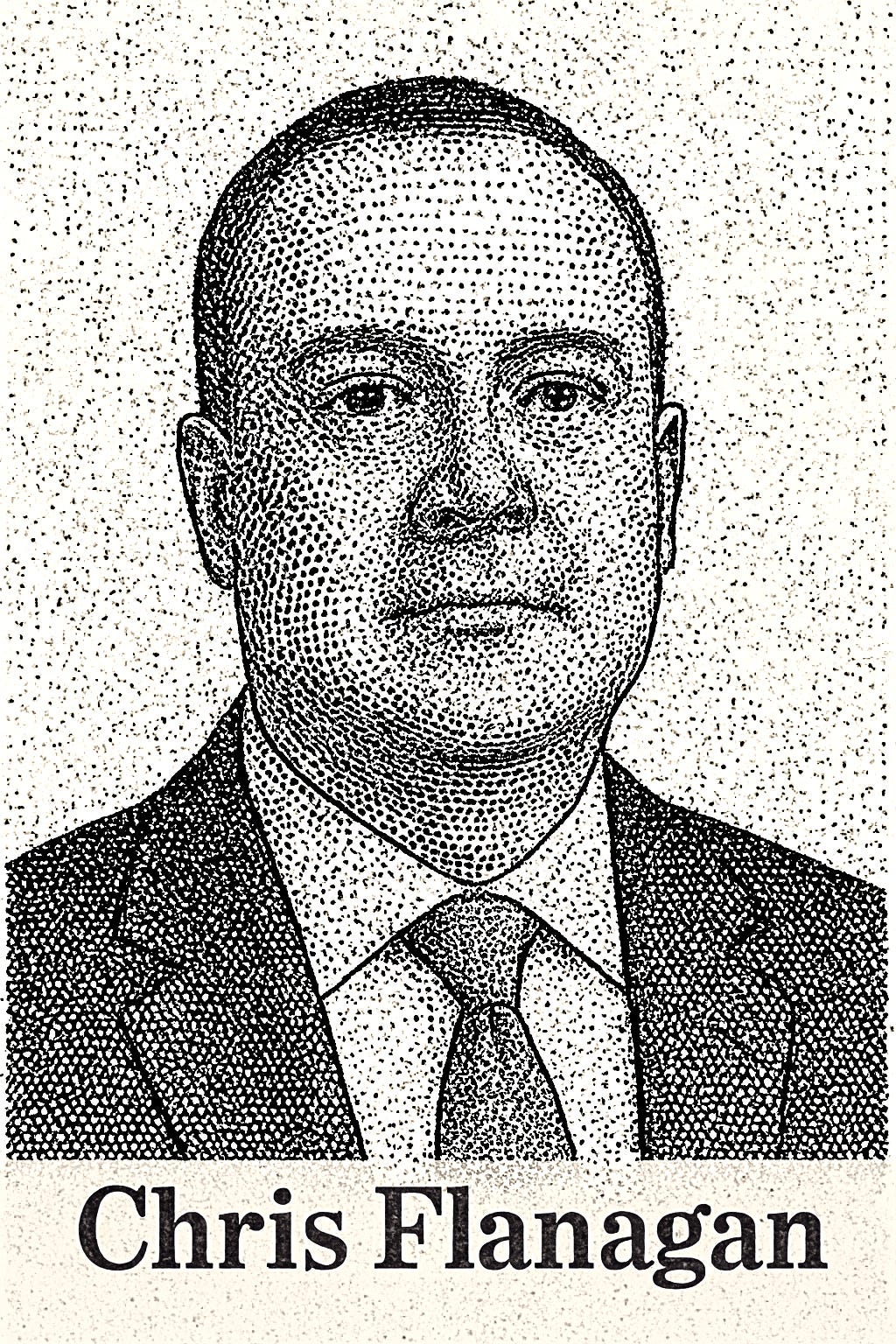
Give Thanks That We Have The NY Times To Teach Us Policing
So The New York Times has weighed in on prisoner security. Cops across the country are grateful for the sage advice.
In a one-sided story about a 2024 arrest, the Times covered an ongoing lawsuit against the NYPD regarding a hospitalized prisoner being held in the psych ward at Jacobi Hospital.
A violent, emotionally disturbed homeless man was taken into custody in May 2024 because he was a danger to the community. He resisted arrest and fought with the cops. It turned out he had three open warrants, including one for weapons possession.
The man was removed to the psych ward at Jacobi in the Bronx. He remained there for almost a month, as the wheels of justice in the Bronx barely move these days. The prisoner was handcuffed to the bed and his legs shackled for much of that time. Naturally, the Bronx DA’s office later dropped the charges — that is how they do justice up there. The lawsuit argues the hospital stay amounted to cruel and unusual punishment.
The lawsuit decries the NYPD policy of keeping prisoners handcuffed while hospitalized despite requests from doctors. In this case, the attending psychiatrist requested the restraints be removed. That request was for the prisoner’s “well-being,” not for a medical procedure.
The NYPD Hospitalized Prisoner policy allows handcuffs to be removed at a physician’s request, but if the officer objects, a supervisor must be called. The supervisor can assign additional officers or even request Emergency Services to prevent escape.
The policy’s wording makes clear that restraint removal is intended for short-term treatment needs — not because a prisoner is uncomfortable, or because the Bronx DA and courts are taking too long to arraign him. Once arraigned, the prisoner can be transferred to a secure Department of Correction facility, like the one the city spent $241 million building inside Bellevue Hospital. You read that right — a quarter of a billion dollars for 104 beds. But it has a basketball court, so it’s probably worth the money.
I sympathize with anyone stuck in a hospital for a month, particularly while handcuffed to a bed.
But the policy exists for a reason: hospitals are the most common point of escape for prisoners.

When I was on the job, if a cop allowed a prisoner to escape, he was automatically suspended without pay. Hospitalized prisoners were required to be handcuffed to the bed and foot shackled. A Sergeant, Captain, and Inspector had to visit every hospitalized prisoner on every tour — three times a day. Those manpower-draining visits were not about comfort; they ensured vigilance, secure custody, and hospital staff safety.
That policy came from years of hard lessons. As a young cop, I recall a prisoner attempting to escape from Bellevue Hospital after staff demanded the handcuffs be removed. The prisoner immediately sprang from the bed, grabbed a chemical fire extinguisher, discharged it in the cop’s face, and struck him with it. He then attempted to assault hospital staff. During the struggle the officer discharged his weapon, causing the man to flee.
In my short time as a patrol cop, I had two hospitalized prisoners attempt escape. One tried to run while using the bathroom. Another drug-addled man tried dragging his entire hospital bed out of the emergency room despite the wheels being locked. He promised to come right back — he just had to “get something real quick.”
A quick review of headlines shows hospital prisoner escapes are a daily occurrence nationwide. Despite NYPD efforts, it still happens regularly in New York City.
As a result, NYPD brass and individual officers often refuse to remove restraints unless medically necessary. Comfort of the prisoner does not — and should not — factor into that decision.
Should the system be streamlined? Perhaps. But hospitals rarely prioritize prisoners over regular patients, even at police request. Getting a bedside arraignment approved is often an administrative nightmare that makes NYPD bureaucracy look efficient, and DOC will not assume custody before arraignment.
The NYPD should receive more cooperation and a better process. But cops should not endanger themselves or the public for a small degree of comfort for a criminal.
We have little doubt that the lawsuit arising from Jacobi Hospital will be decided against the NYPD. Why break the streak of courts ruling against cops in New York?
And that will make hospitals a little less safe and police work a little harder.
What else is new?
*****
LAPD Loses Again — As Do Los Angelenos
The LAPD almost was defunded in 2020 when nitwits like Mayor Eric Garcetti wanted to remove $150 million from the agency tasked with ensuring the safety of the city. Garcetti was considered moderate then, as some, like City Councilman Mike Bonin, wanted to remove policing responsibilities from the cops and give them to other agencies while freezing pay increases and defunding police operations.
You may have thought that the tide had turned, as this week, Los Angeles budgeted an addition $130 million to hire 510 new LAPD cops. That’s a nice manpower increase for the LAPD, which has been short personnel for years. But the 510 new cops will only make a small dent in the personnel deficit in a department that has shrunk by almost 1,500 officers since 2019.
But even that was a chimera, a head-fake. Because this month the LA City Council unanimously passed a bill demanding that the LAPD stop pretextual car stops. The bill, originally introduced by the now deposed Councilman Mike Bonin charges the Police Commission with eliminating car stops for any traffic code other than “safety” violations. Consent searches of vehicles are also largely banned.

It seems like the LAPD is still up against it when it comes to support from local politicians. Perhaps the newly hired LAPD cops can take the time they would have spent conducting car stops and use it to clean up messes like this that plague vast swaths of Los Angeles.
Now to find 510 people willing to join the LAPD.
Good Luck.

True Crime Girl: Code Pink May Be Seeing Red Soon
Investigations almost never begin with dramatic perp walks. They start quietly: subpoenas, document requests, regulatory inquiries, and someone in an office asking for records nobody asked for before.
That appears to be where things stand now in the reported Treasury-led inquiry involving Hasan Piker and participants in the March 2026 convoy to Cuba called the Nuestra América Convoy. Reporting indicates the inquiry is being run through Treasury’s sanctions section and includes subpoenas seeking communications and financial records tied to travel and activities in Cuba. No charges have been announced, and those involved deny wrongdoing.
But cases like this generally grow.
Once communications, travel logs, payments, and organizational records start coming in, investigators often widen the scope. If that happens here, the questions could move beyond travel compliance and into whether any individuals or organizations knowingly, recently or in the past, provided unlawful support, services, or other prohibited assistance to Cuban government entities or sanctioned actors.
Or worse: did the Cubans pay them?
These inquiries could put serious scrutiny on participants and affiliates — including members of Code Pink and others publicly associated with the trip — and raise exposure not just to civil penalties but to heavy criminal charges (and financial forfeiture).
And consider this: if investigators ever found evidence of assistance to American fugitives historically harbored by Cuba — figures such as Guillermo Morales, Charles Lee Hill, or previously Joanne Chesimard — further criminal charges could apply.
In short: What have these people been doing, pussyfooting around in Cuba? And if the Trump administration flips the Cuban government — what will we discover?
And there’s potentially even more bad news for Piker and the Code Pink crowd: if the matter were ever referred federally, the venue and personnel handling it could well be the DOJ Washington office. Meaning: Judge Jeanine Pirro would catch the case.
Piker, Medea Benjamin, Jodie Evans, and the rest of these extremists shouldn’t expect a whole lot of quarter there.
And finally….

On this 250th anniversary of the nation and 25th of 9/11: Never forget.

 | A guest post by
|
This is the Donroe Doctrine meeting the cold-case file. Cuba is not just a failed communist museum with old cars and ration lines. It has been a hostile platform, a sanctuary for American fugitives, and a forward operating space for America’s enemies. If Raúl Castro gets indicted, fine. But the real test is extradition, intelligence rollback, and accountability for the criminals Havana protected. Morales. Hill. The networks around them. The files. The handlers. The safe houses. The Cuban people deserve liberation from communist failure, and Americans deserve justice for old blood debts. No more symbolic gestures. Bring back the whole file cabinet.