

Anthony Fauci apparently has a pardon.
But who issued it?
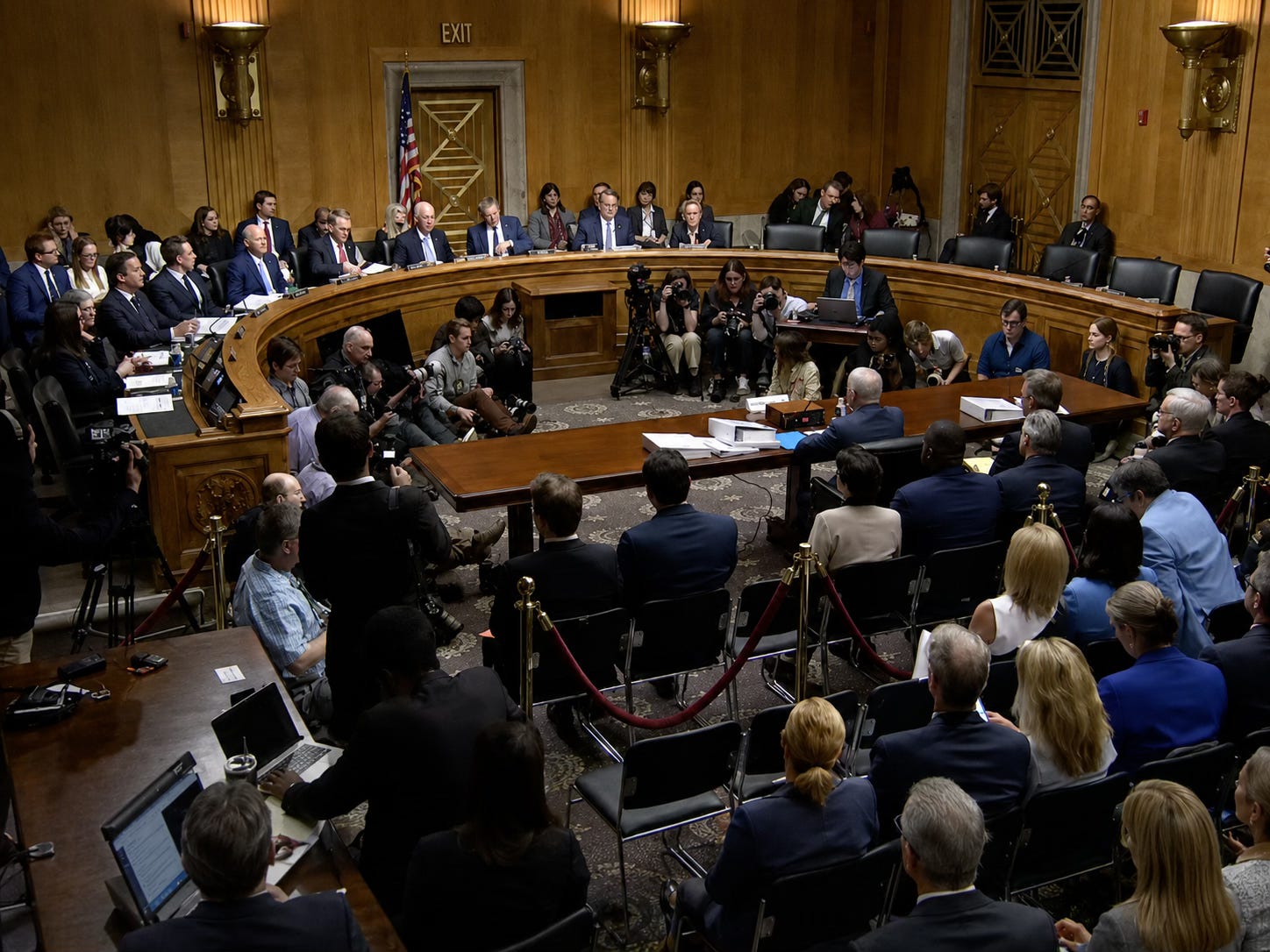
That question has become considerably more important following the release of Fauci’s 1,141 page pandemic diary, the disclosure of additional internal emails, and his return to Congress last week, where he invoked his Fifth Amendment right to remain silent. Together, those materials provide investigators with contemporaneous accounts of what Fauci privately knew, discussed and said during the pandemic, including the seriousness with which he considered the possibility that the virus emerged from a laboratory in Wuhan.
The new materials can now be compared, entry by entry, against Dr. Fauci’s prior testimony before Congress. Even a cursory review reveals apparent conflicts involving the death rate comparisons he privately dismissed, the extent to which he defended lockdowns and closures (Diary, March 15, 2020), and the seriousness with which he privately considered a possible laboratory origin for the virus (Diary, February 1, 2020). There are also serious questions concerning the funding of gain of function research at the Wuhan Institute of Virology, and Fauci’s instruction that a potentially relevant email be deleted after to hide its contents. These are not small discrepancies.
Senator Rand Paul contends that Fauci presented a materially different account to Congress, to the public, and to his diary. He’s not wrong. Those apparent conflicts, combined with Fauci’s invocation of the Fifth Amendment, provide a real basis to consider seeking an indictment.
Depending upon precisely what Fauci said, what he knew, whether his statements were material and whether he acted willfully, the possible federal charges include perjury, making false statements and obstruction of Congress. The diary does not itself prove those offenses. But it gives investigators new evidence with which to evaluate Fauci’s testimony.
The apparent obstacle is the document issued on January 19, 2025, purporting to pardon Fauci for federal offenses connected to his government service from January 1, 2014, through January 19, 2025. But at this point, describing it as an actual pardon issued by Joe Biden assumes too much.
The Constitution gives the pardon power to the President. Not to his chief of staff. Not to his family. Not to a White House aide. If Biden never personally made the decision, then there was no presidential pardon. There was only a document bearing his name.
Merely using an autopen to sign a document does not, by itself, make a pardon invalid. An autopen may be used if the President actually made the decision and authorized its use. Whether Biden signed the document by hand or directed an autopen to apply his signature is therefore not important. The question that matters is whether Biden personally authorized the pardon and what evidence establishes that authorization.
The testimony and available evidence make clear that an autopen was used to execute the purported Fauci pardon, meaning that Biden did not sign it by hand. The critical question, then, is what evidence establishes that Joe Biden actually authorized the pardon. The evidence, documentation and procedures surrounding both that authorization and the subsequent use of the autopen were, simply put, atrocious.
The Record Keeping
First, the House Oversight Committee found a pervasive pattern of carelessness and irresponsibility in the Biden White House’s general handling of presidential documents and executive decisions. The Committee found massive holes in the chain of custody for Biden’s decision binder, which was supposed to contain memoranda showing whether he approved or rejected proposed executive actions. Purported presidential approvals were frequently not memorialized. Autopen approvals were also missing. There was no reliable log identifying who handled the decision materials, who operated the autopen or whether particular documents actually reflected Biden’s decisions.
More specifically, with respect to the Fauci pardon, the evidence reveals a level of irresponsibility that simply boggles the mind (unless of course, it was purposeful). Fauci, whom some had accused of helping conceal the origins of a pandemic that killed millions worldwide, was included in the January 19, 2025 slate of pardons processed through what the Committee called a presidential pardon “game of telephone.” Even accepting the Biden staff’s account of events at face value, this was a stunningly irresponsible way to exercise one of the most important powers entrusted to the President in connection with one of the most consequential world events of the modern era.
Here is What they Say Happened
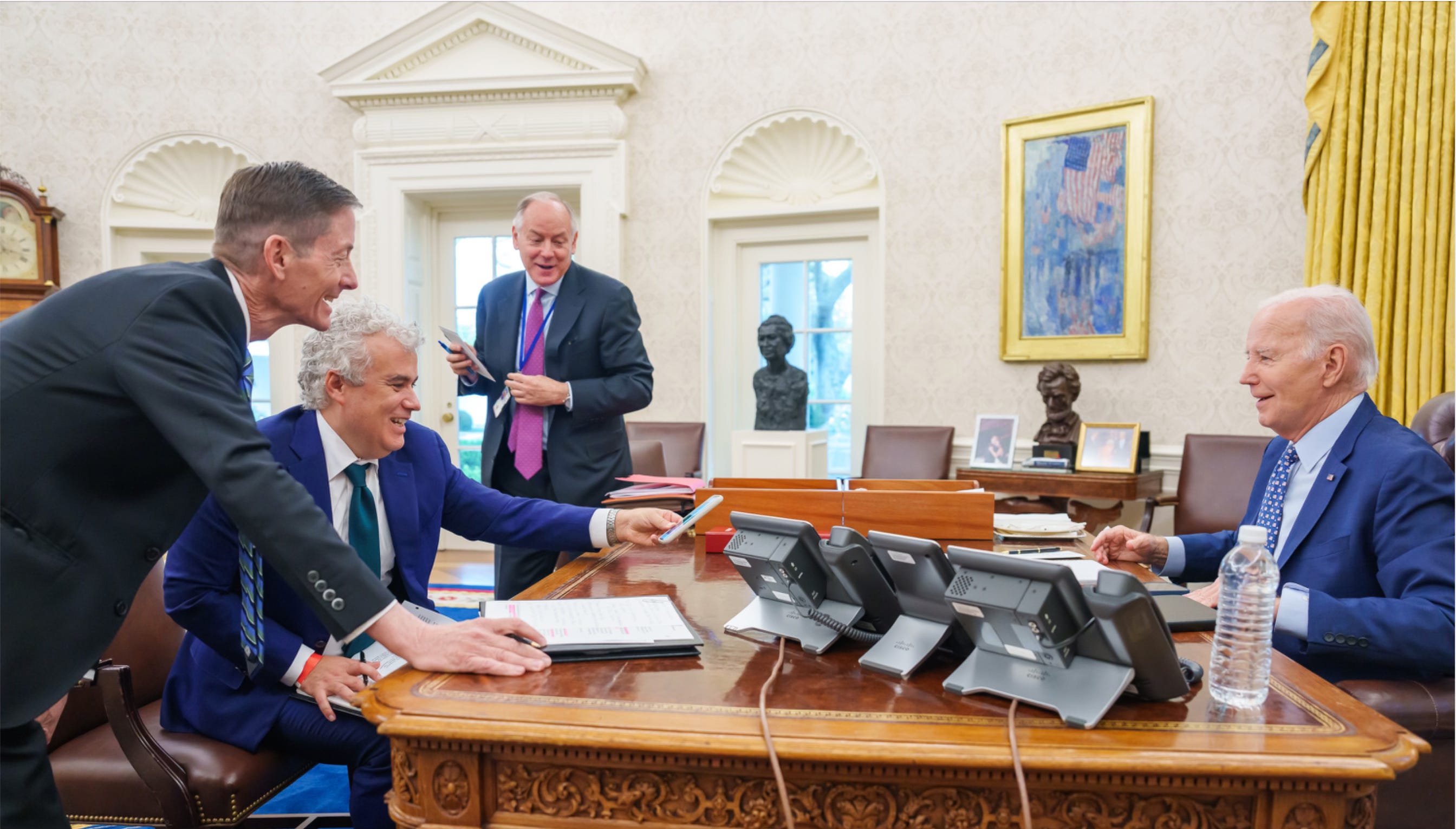
A meeting was supposedly held on January 19, 2025 at which Joe Biden is said to have approved a group of pardons. There are no contemporaneous notes or memoranda from that meeting recording any of Biden’s “approvals.” According to the Committee’s reconstruction, the meeting included Biden staff members Bruce Reed, Steve Ricchetti and Annie Tomasini, along with White House Counsel Ed Siskel and Anthony Bernal, assistant to the President and chief of staff to First Lady Jill Biden.
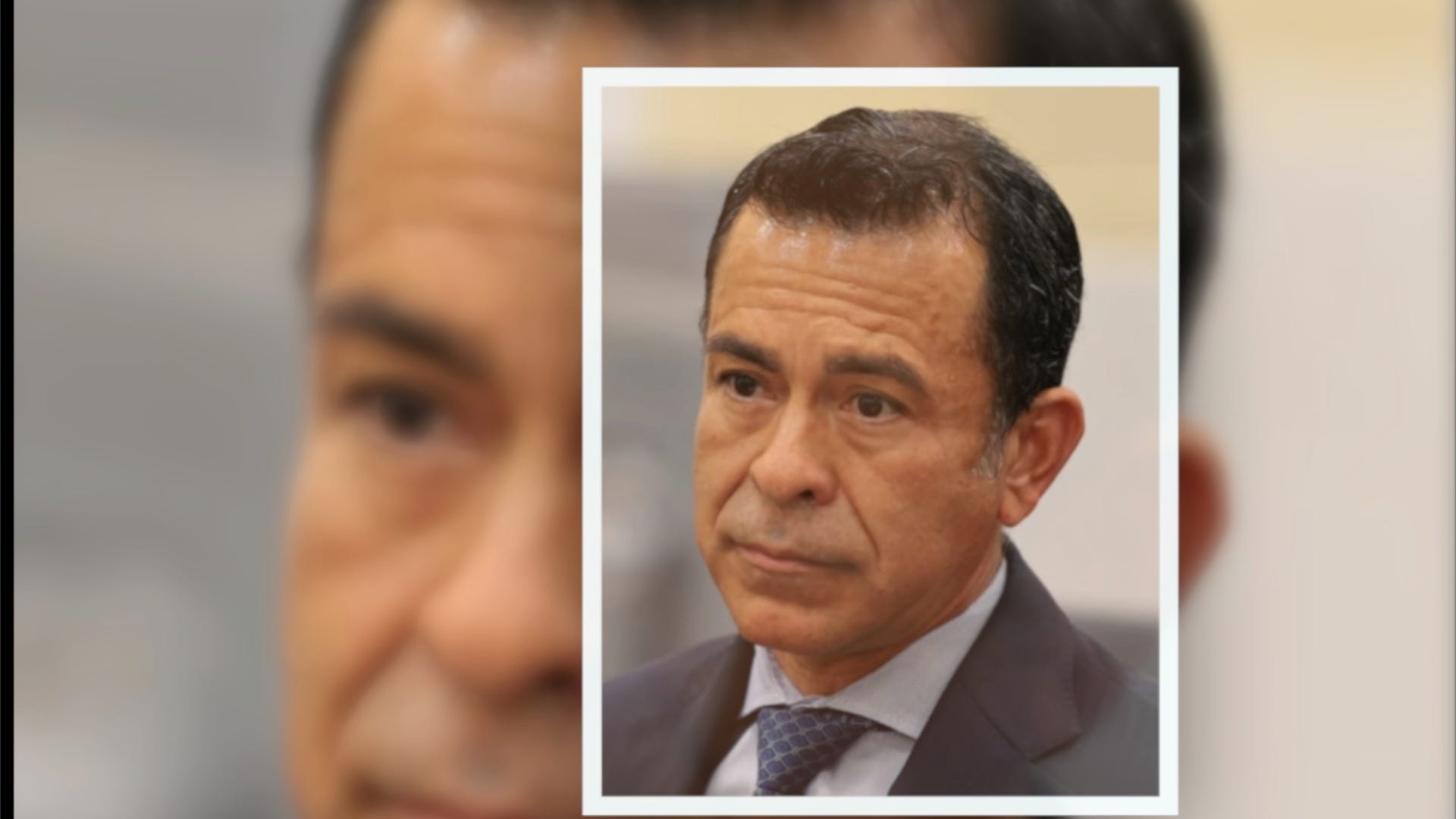
Chief of Staff Jeff Zients was not at the meeting nor was Rosa Po, a Zients staffer, who would prove important.
Zients testified that after the meeting he assumed, though he did not know, that Reed or Siskel must have told Po that Biden wanted to pardon Fauci. Po then telephoned Zients at home and repeated what she had been told.
Zients did not call Biden to confirm the decision. He did not call Reed, Siskel or anyone else who had attended the meeting. Instead, Zients allegedly told Po to send an email from his account approving the use of the autopen to pardon Fauci.
Po sent the authorization email to herself from Zients’s account, copying other senior aides involved in processing the pardons. The approval then passed through the Staff Secretary’s Office until someone operated the autopen. Zients testified that he did not know who that person was and that no log identified who had operated the autopen.
The Five Witnesses
As there are apparently no contemporaneous documents or memorandum from this January 19, 2025 meeting, let’s drill down on the testimony from the five people who were supposedly present when Joe Biden is said to have issued Fauci’s pardon. Referring to the decision to pardon Fauci, Bruce Reed testified: “I think I was present when the President made it,” though Reed said he did not “remember specific discussions” about the pardon and “wasn’t involved in that decision.” But he said he does recall specifically that the President made the decision to prevent “retaliation” against Fauci.
Steve Ricchetti’s testimony did not corroborate that the January 19 meeting occurred or that Biden approved the Fauci pardon there. In fairness however, Ricchetti was never specifically asked about the January 19 meeting or about Fauci’s pardon. His pardon testimony focused primarily on Hunter Biden and on the general proposition that presidential pardon decisions should have been made by Biden.
White House counsel Ed Siskel did not testify at all.
And when called to testify at their depositions, the other two witnesses, Annie Tomasini and Anthony Bernal, responded with now familiar language:
On the advice of counsel, I respectfully decline to answer the question pursuant to my Fifth Amendment rights under the Constitution.
They took the Fifth.
That is supposedly how the man who helped lead America’s COVID 19 response received a pardon covering more than eleven years of government service, including his role in directing the nation’s response to a pandemic associated with the deaths of more than one million Americans. These are not merely technical defects. The evidence and testimony reflect an almost complete absence of contemporaneous evidence that the President exercised the pardon power at all.
The Incapacity
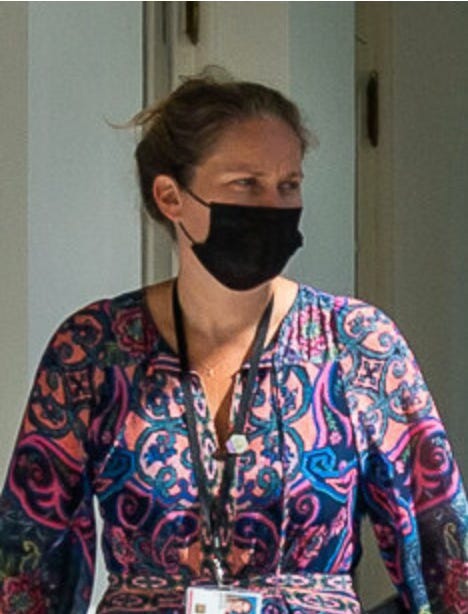
This extraordinary process must be considered alongside the obvious evidence concerning Joe Biden’s mental condition at the time. The Fauci document was issued nearly seven months after the country watched Biden struggle with his incapacity through his June 2024 debate with Donald Trump, and more than eleven months after Special Counsel Robert Hur declined to recommend charges against Biden, at least in part (some would argue, largely) due to Biden’s infirmity.
By January 2025, when Joe Biden supposedly considered the Fauci pardon, his own party had already effectively concluded that he could no longer credibly continue as President. Democratic leaders had forced him from the 2024 race after the debate made his mental condition impossible to conceal.
Meanwhile, CNN’s Jake Tapper and Axios reporter Alex Thompson had conducted more than 200 interviews, mostly with Democratic insiders, for their book Original Sin: President Biden’s Decline, Its Cover Up, and His Disastrous Choice to Run Again. Their later reporting exposed the existence of the “Politburo,” a small circle of family members and senior advisers who were, in effect, running the White House while treating the President’s cognitive decline as merely a political problem to be managed and concealed.
That reporting confirmed what hundreds of millions of people worldwide had repeatedly seen with their own eyes and were, unfortunately, familiar with: clear signs of dementia. Politics, publishing standards, respect, and an inability to diagnose the precise condition may have kept many from saying so plainly and publicly. But in reality, it was simply undeniable: something was wrong with Joe Biden’s brain.
That reality also bears directly upon the credibility of those now attempting to explain what occurred inside the White House. Having participated in, or helped sustain, that deception, members of the protective inner circle, including Reed, Bernal, Ricchetti and Tomasini, now have an obvious interest in portraying Biden as competent and capable during that period, minimizing what they knew, and protecting themselves from responsibility. Their testimony must therefore be viewed in light of both their demonstrated willingness to conceal the truth and their continuing need to insist that the President was functioning normally.
All of this does not mean, however, that the legal argument that the Fauci pardon is a nullity depends upon declaring Biden legally incapacitated. Indeed, a court likely could never make such a determination. The Constitution assigns that judgment exclusively to the political process established by the Twenty Fifth Amendment. A court cannot retroactively decide that Biden was unable to serve and invalidate his actions on that basis.
Biden’s condition matters for a different reason. It helps explain how and why other people were apparently making decisions in his name. His deterioration, combined with the lack of documentation and the bizarre telephone chain, makes it considerably more likely that others were making decisions and merely attributing them to Biden.
Ordinarily, courts presume that government officials properly performed their duties. Thus, a signature appearing on an official document is ordinarily presumed authentic and properly authorized. Courts refer to this as the “presumption of regularity.” But before that doctrine can apply, there must first be some regularity to presume.
Here, the evidence shows the opposite. There was no consistent procedure, no complete authorization log, no reliable chain of custody documentation and no contemporaneous record tracing the Fauci pardon to Biden’s actual approval. The handling of the Fauci pardon instead appears (at best) to have been improvised and ad hoc. The evidence developed thus far reveals distinct and pervasive irregularity. Coupled with the evidence concerning the President’s cognitive condition, this provides a strong basis for denying the document the usual presumption of regularity.
So What Can be Done?
One possible path is to empanel a grand jury and seek to indict Fauci, treating the purported pardon as a nullity. Fauci would undoubtedly challenge the indictment based upon the pardon. At that point, a court could examine what actually occurred.
The court could determine who selected Fauci as a pardon candidate, who presented the proposal, who communicated the supposed decision, what Biden was told and what evidence establishes that Biden personally authorized anything.
To get closer to the truth, additional evidence is needed.
The Committee found that the January 19 slate of pardons that included Fauci also covered General Mark Milley, members and staff of the House January 6 Committee, and five members of the Biden family.
Jeff Zients testified that Hunter Biden participated in some pardon discussions during the administration’s final weeks. Hunter should be deposed about those discussions. Jill Biden has acknowledged participating in the decision to pardon her son. She should be deposed about the pardons, her participation, what she knew about her husband’s condition, and the involvement of her staff in running the White House – most notably Anthony Bernal. Every participant in the January 19 meeting should also be placed under oath and made to speak of exactly what occurred. Where appropriate, prosecutors should consider granting immunity so that witnesses cannot continue invoking the Fifth Amendment to withhold what they know.
There is no real precedent for anything quite like this. America has endured episodes in which an incapacitated President was concealed from the public. Woodrow Wilson suffered a devastating stroke in October 1919, after which Edith Wilson effectively ran the White House, keeping up the fraud for more than seventeen months. But even that extraordinary episode did not produce this precise legal question.
After years of concealment, evasion and deception, the country may finally be able to get some definitive answers. While it would be ugly, divisive and likely to reopen old wounds, an indictment of Fauci could produce litigation capable of addressing two lingering questions from the unsettling COVID period: where the virus came from and who was actually running our country.
The Fauci pardon may be the doorway into the shadow presidency. No reliable authorization log. No clean chain of custody. No contemporaneous meeting notes. Key witnesses taking the Fifth. Biden’s obvious decline. Staffers relaying supposed decisions through a telephone-game process. That is not how constitutional power should operate. The pardon power belongs to the President, not aides, family, handlers, or White House courtiers managing a diminished figurehead. Indict Fauci, force the pardon fight into court, and make the machine answer two questions: where did COVID come from, and who was running the country?
Not for nothin', I LIKE the idea of a grand jury investigation.
Sadly...
I can't see it happening.