
Weekend Buff
NYPD: A City and its Police

Thomas Reppetto was one of the most influential men in modern policing. He was a Commander of Detectives for the Chicago Police Department, the dean of John Jay College of Criminal Justice, founder of the Citizen Crime Commission, and the author of several books and numerous articles. I had the pleasure of meeting him when he came to visit the NYPD Chief of Detectives in 2013.
He teamed up with author James Lardner to research and publish a book on the New York City Police Department, titled “NYPD: A City and its Police”, which is our recommendation for this installment of Weekend Buff.
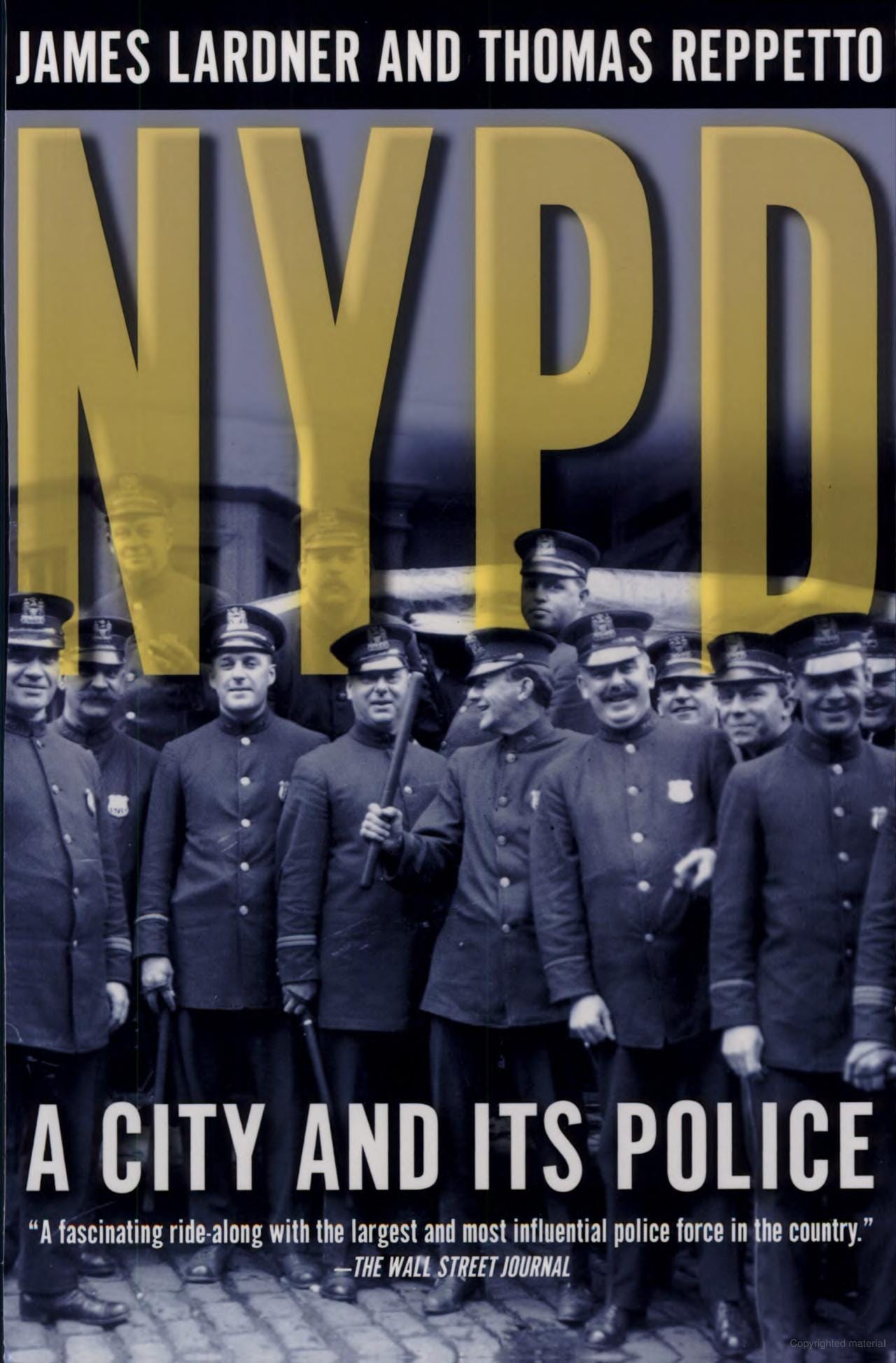
This book is a fascinating and engaging history of policing in the Big Apple, from its humble beginnings of nightwatchmen, to the formation of the Municipal Police in 1845, its transition to the Metropolitan Police in 1857, to the modern professional force of the 21st Century.
Reppetto and Lardner tell this story in an engaging manner. They relate the experiences of the regular beat cop and the men who changed the department such as Clubber Williams, who’s oft quoted line “There’s more law at the end of a policeman’s nightstick than in a decision of the Supreme Court”, was emblematic of the violence and corruption that characterized 19th Century policing in NYC.
They also tell the tale of men like Thomas Byrnes, who is credited with the creation of the modern detective model, but also used methods such as “the 3rd degree” to elicit confessions. He covers NYPD leaders through the years, from reformer Teddy Roosevelt up to Bill Bratton and his revolutionary approach to policing that put the NYPD on the forefront of effective crime reduction.
Unfortunately, the history of the department is filled with instances of corruption and efforts at reform. Reppetto and Lardner detail these misdeeds and the various commissions that tried to eradicate them. They do a good job of explaining the forces that led to corruption and the ebb and flow of reform and regression.
That narrative is told with the stories of men like crusaders Frank Serpico, Lewis Valentine, and Giuseppe Petrosino.
The book covers over 150 years of policing, so there is no room for deep dives into one era or another, but they manage to detail important events while keeping the story moving. Using the men and women that served in the department to illustrate its flaw and successes, the authors produce a succinct but comprehensive narrative.
The book was published in 2000, so there is certainly some important topics missing here like the tragic attack on September 11th, and Commissioner Kelly’s creation of an international intelligence and counterterrorism apparatus. Kelly has his own book on that topic, which can be read to complement this chronicle.
NYPD: A City and Its Police is just short of 400 pages, but it is a page turner and an easy read. As a NYPD cop who took several promotional exams, I found this book to be an intriguing exploration of the department’s history as it relates to departmental procedures. I could see the reasons for many seemingly arcane patrol guide directives by learning how prior events led to their creation. You can find the book on Amazon for $8. It is a must read for any police buff as the long, sometimes checkered, history of the nation’s largest police department is full of interesting stories and larger than life cops.

Thanks for reading The Ops Desk. Stay Safe.
I was a member of the infamous 'Class of '82'. Our claim to fame was 2,500 recruits went through PARTS in 6 months b/c manpower was so bad. It was a very, very unique class. I personally knew guys w/ law degrees and actually one guy w/ an MD degree who put off his residency to sign up.
We all shared one common trait: we didn't want to be 40 years old and wonder what it would have been like to be on the job.
The top 250 graduates were sent direct to command- no NSU or field training of any kind. I was in a radio car six weeks after commencement.
The notorious thing about our class was that w/in five years, 25-30% threw in the towel. In that brief period of time I was in 2 shootouts, was stabbed once (more a nick, but that was luck), almost run over, yadda yadda (I was in ACU w/in a year of graduation) I was also a licensed Plumbing & Heating contractor, so yeah, I pulled the pin as well. Back then, I had been told the life expectancy of a cop was 55 years old. Maybe an urban myth, but in my time on the job, I went to a couple of funerals of young guys who just dropped dead of heart attacks.
The book of that era I recall was 'Street Cops' a photo essay by Jill Freedman.
I don't regret leaving, but I treasure the memories of every tour.
Paul, thanks for recommending NYPD: A City and its Police. In your review, you wrote, "As a NYPD cop who took several promotional exams." Our Federal Agencies could take a step towards self-improvement by establishing promotional exams. That's right, there is a distinct lack of promotional exams in Federal law enforcement.
I retired in 1998. While I hope things have changed in every agency for the best, I doubt it. To be promoted back then, the Special Agent usually filled out a form for a promotion. He/she explained why he or she was qualified for promotion. Then a panel reviewed the candidate applications and prepared a BQ (Best Qualified) List that went to the selecting official. That system resulted in favorites being promoted and very well qualified applicants being dismissed from consideration because others were closer to the personalities of the Agency powers in power. Self-proclaimed proficiencies were never formally questioned.
I hope President Trump will explain to his Cabinet (just about all agencies have internal investigators) that the Best and Brightest are the ones he wants to be promoted. (I know the President is a Fox fan and watches your interactions involving law enforcement issues.) Internal objective promotion exams need to be prepared to recognize competence, not self-claimed proficiencies. To prove my point, as an Assistant Special Agent in Charge, I observed one Group Supervisor who did not understand the working of a Federal Grand Jury. Instead of guidance, he must have felt that his main job was to certify the attendance payroll every two weeks. It is really hard for in-service training to teach the politically orientated instead of the professionally gifted.
Best regards and keep up your fantastic work.