
Weekend Buff
The Big Nowhere - by James Ellroy

James Ellroy is one of our country’s pre-eminent crime fiction writers. He has written a trove of novels, five of which were adapted to the silver screen. His writing style is dynamic as shifting, leaving the reader with a different approach to each novel.
Four of his books are loosely related and called the LA Quartet: The Black Dahlia, The Big Nowhere, LA Confidential, and White Jazz. The four books relate fictional tales of the LAPD during the late 1940’s and early 1950’s.
The four books follow a loose timeline but are mostly unrelated – a few reoccurring characters but each can stand alone. I inadvertently am reading them in reverse. White Jazz was the only promising novel in an Orlando Airport bookstore, LA Confidential was available at my local library. So committed, I picked up the 2nd book in the quartet, The Big Nowhere. It’s our pick for this installment of Weekend Buff.
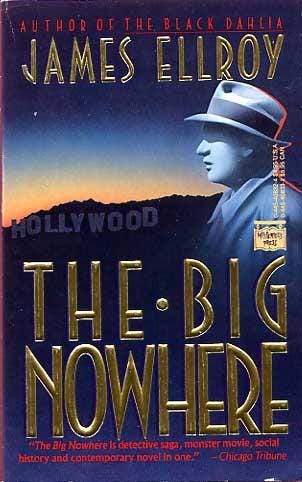
None of Ellroy’s books have disappointed me, but The Big Nowhere might be the best so far. It is an elaborately designed masterpiece of writing. The story is complex, yet flawless. Ellroy writes every line with purpose and meaning.
The story starts with two narratives that eventually come together after a few hundred pages.
LA Sheriff’s Deputy Danny Upshaw catches a brutal homicide that is clearly the work of a serial killer. Additional homicides prove this hypothesis. It’s been a while since I’ve been at a homicide, but Ellroy captures the scene with perfectly grotesque horror that is true to life. Reading the description turned my stomach a bit. Rookie investigator Upshaw takes serious interest in the case, and is committed, perhaps overly committed, to solving it.
On the LAPD side of the book, Lieutenants Mal Considine and Dudley Smith are undertaking a LA District Attorney’s politically motivated investigation into Communist infiltration in the movie business. Ex-cop and fixer Buzz Meeks is added to the case for some muscle. They are dodging political landmines while engineering the desired investigative outcome - for the greater good, you see.
Upshaw is all about the work. Considine and Smith are all about the politics, and Meeks is all about Meeks. It’s hard to see how these stories come together, but Ellroy spins and weaves them masterfully.
What does come roaring through in The Big Nowhere is Ellroy’s cynical look at life in Los Angeles. The city itself is a character in the story – and it’s not the good guy. Intense, pervasive corruption, dirty politics, dirtier cops, and pervasive racism, sexism, and homophobia mar every page. If you are easily offended, this is not the book for you.
This is a noir book like no other. Even the heroes seem unredeemable - they all have their own angle.
The Big Nowhere is not exactly historical fiction, but Ellroy does use historical characters such as Howard Hughes (who hated Communists in real life as well as in this story) and gangster Mickey Cohen. These ancillary characters give the story a feel of the genuine without trying to be “based on a true story”, which I often don’t care for.
One of the interesting things to note about Ellroy is that his writing style changed dramatically while penning the LA Quartet. He starts with long, descriptive sentences and paragraphs in The Black Dahlia. By the time he writes White Jazz, he is into short bursts of words that leave the reader putting the pieces together. I feel with The Big Nowhere, he hits the mark with something in the middle. Regardless, it’s a fascinating look at the evolution of a great writer.
The Big Nowhere is a page turner – with a lot of pages. Not a weekend read, running 450 pages, but it’s worth it. Ellroy sucks you in to gritty LA where life is cheap, and morals are in the gutter despite the glitter and glitz on the surface. He has you hooked from the first chapter. You can purchase The Big Nowhere on Amazon for $19 paperback or $13 on the Kindle or Nook – which I went for. Enjoy the book, you won’t be disappointed.
Thanks for reading The Ops Desk. Stay Safe!

Thanks for the reading suggestions! Interesting about the writing style changes. Actually, may have read two of them, but without looking through a long hand-written list of my "books read" (kept in many places), I am not sure. You might like John LeCarre. He writes masterfully sometimes and terribly other times. But when he's at his best, he's brilliant! His philosophical Smiley character fascinates me.
Didn't know about the 4 books. Years ago, I saw the movie The Black Dahlia. I thought the preface to the movie indicated it was based on a true unsolved case. Hmmmm. You indicated the book is fiction. Maybe the movie preface was designed to make it seem real when it wasn't, but I really thought I'd heard of the case since then as being real, too. The movie The Black Dahlia was excellent at least by standards decades ago when I saw it.