Weekender: A Forgotten Classic
Charles Bronson in an atmospheric American gem

There are movies that become classics because critics crown them. And then there are movies that quietly earn their place through sheer toughness, style, and authenticity. Hard Times belongs firmly in the second category. Walter Hill’s 1975 Depression-era street-fighting drama is one of the great forgotten gems of American cinema — lean, atmospheric, and utterly confident in what it wants to be.
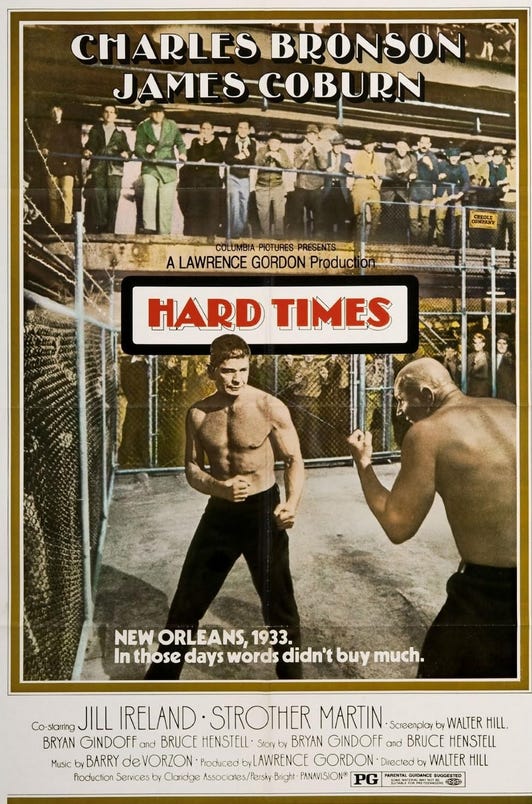
At a time when Hollywood increasingly mistakes noise for substance, Hard Times feels almost revolutionary in its restraint. There are no bloated speeches, no unnecessary subplots, no gratuitous blood or explosions, and no desperate attempts to explain every emotion or political nuance to the audience. Hill trusts viewers to absorb the world through mood, action, and character. The result is a film that feels timeless.
At the center is Charles Bronson delivering his best performance, period. Never noted as a great actor, his grim stoicism is exactly on-point for this one.
Bronson plays Chaney, a mysterious drifter who arrives in New Orleans during the Great Depression with little more than the clothes on his back and a frightening ability to fight bare-knuckle. Chaney barely speaks, but Bronson turns silence into a weapon. Every glance and measured movement tells you exactly who this man is. In lesser hands, the role could have become a parody of masculine cool. Bronson instead gives Chaney a weary dignity that makes him magnetic from the moment he appears onscreen.
What makes Hard Times special is that it understands toughness without glorifying cruelty. Chaney isn’t a superhero. He’s a survivor. The movie presents fighting not as spectacle, but as labor — brutal, exhausting, and transactional. There’s dirt under the fingernails of this film. It reminds you of how tough boxers and MMA fighters actually have it.
And the New Orleans setting becomes a character itself. Hill captures the city as humid, battered, and half-forgotten, full of smoky back rooms, crumbling streets, riverfront shadows, and desperate hustlers trying to scrape by during the Depression. The city gives the movie its soul. Without New Orleans, Hard Times would lose much of its melancholy charm and authenticity. And the bayou scenes alone drip with character — you’ll feel like you were invited to a genuine crawfish boil (which I suspect the film crew was). It’s true Americana, without the kitsch.
Walter Hill directs with discipline, especially for a debut feature. Every frame feels purposeful. The fight scenes are quick and vicious, avoiding the cartoon choreography that infected later action films. When punches land in Hard Times, they feel painful.
The supporting cast is equally strong. James Coburn steals scenes as Speed, Chaney’s fast-talking promoter and gambler. Coburn brings humor, desperation, and charm to the role, creating the perfect contrast to Bronson’s stoic calm. Their chemistry quietly drives the movie. And any movie with Strother Martin is okay with us.
Visually, the film is gorgeous in a dusty, worn-down way. The Depression-era settings never feel artificial or overdesigned. The jazz-infused score adds another layer of grit and melancholy, making the film feel like an old American folk tale.
What’s remarkable is how modern Hard Times still feels. It predates the stripped-down masculinity later celebrated in films like Drive or The Wrestler, yet it accomplishes many of the same things with greater subtlety.
For years, Hard Times has lived in the shadow of bigger Bronson hits like Death Wish. But this is a much better film — tougher, smarter, and far more artful.
It’s not just a great Charles Bronson movie. It’s one of the great underappreciated American films of the 1970s.
I found and watched if for free, with limited commercials, by simply downloading the Roku app on my television. There appear to be other free options; here’s the link.
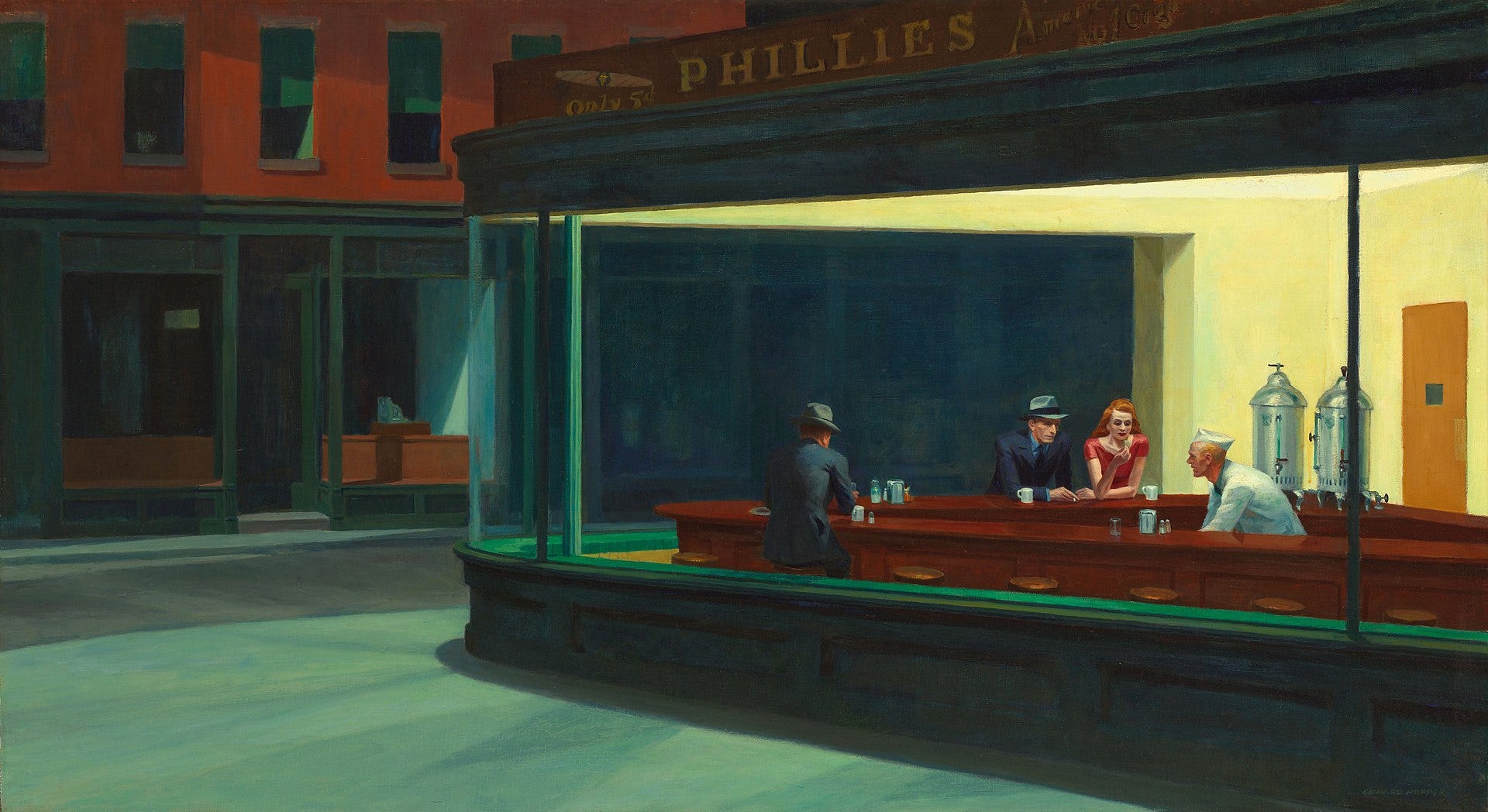
Hard Times runs about an hour-and-a-half. It’s a callback to when movies could genuinely transport you to another place and time, without being overdone. A great late night flick — and one that’s aged beautifully, like an Edward Hopper painting come to life.